
Sicilian Chicken Soup is more than just a meal; it’s a warm hug in a bowl, a fragrant journey to the sun-drenched coasts of Sicily. Have you ever craved a dish that nourishes not only your body but also your soul? This is precisely what makes Sicilian Chicken Soup so utterly irresistible. It’s the kind of comfort food that transports you, conjuring images of bustling family gatherings and the scent of fresh herbs wafting from a rustic kitchen. What sets this soup apart is its vibrant medley of flavors – a delightful balance of savory chicken, tender vegetables, and the unmistakable, bright zest of lemon and parsley that sings with every spoonful. It’s a testament to the simplicity and richness of Sicilian cuisine, proving that the most profound culinary experiences often come from the freshest, most honest ingredients. Get ready to fall in love with this wonderfully comforting and deliciously aromatic soup.

Ingredients:
- 4 bone-in, skin-on chicken thighs (about 2 pounds)
- 1 medium yellow onion, chopped (about 1 cup)
- 3 celery ribs, chopped (about 2 cups)
- 3 medium carrots, chopped (about 1 1/2 cups)
- 1 large yellow bell pepper, chopped
- 2 medium russet potatoes (approximately 1 pound total), peeled and cut into 3/4-inch cubes
- 4 cloves garlic, chopped
- 1 (14.5 ounce) can no-salt-added diced tomatoes, undrained
- 2 dry bay leaves
- 1 tablespoon kosher salt
- 1 (32 ounce) carton low-sodium chicken stock
- 4 cups water (or additional low-sodium chicken stock)
- 1/2 cup dry ditalini pasta
- 1/2 cup fresh chopped Italian parsley
- Freshly ground black pepper, to taste
Preparing the Chicken and Aromatics
Step 1: Browning the Chicken
To build a rich foundation for our Sicilian Chicken Soup, we’ll start by browning the chicken thighs. This step is crucial for developing deep flavor. Pat the chicken thighs thoroughly dry with paper towels; this helps achieve a better sear. Season them generously on all sides with some of the kosher salt and freshly ground black pepper. Heat a large, heavy-bottomed pot or Dutch oven over medium-high heat. Add a tablespoon of olive oil (though not listed, it’s standard for searing, or you can render some fat from the chicken skin). Place the chicken thighs skin-side down in the hot pot and sear for about 5-7 minutes, until the skin is deeply golden brown and crispy. Flip the thighs and sear the other side for another 3-5 minutes. Once browned, remove the chicken from the pot and set aside on a plate. Don’t worry if the chicken isn’t cooked through at this stage; it will finish cooking in the soup. This browning process renders some of the fat and creates delicious bits stuck to the bottom of the pot, which we’ll deglaze later.
Step 2: Sautéing the Vegetables
Now, we’ll sauté the aromatic vegetables to soften them and release their flavors. If there’s excess fat in the pot from the chicken, you can pour off all but about 1-2 tablespoons. Add the chopped onion, celery, and carrots to the pot. Cook over medium heat, stirring occasionally, for about 8-10 minutes, or until the vegetables begin extract to soften and the onion becomes translucent. This slow sautéing process allows the natural sugars in the vegetables to caramelize slightly, adding a lovely sweetness and depth to the soup. Next, add the chopped yellow bell pepper and continue to cook for another 3-4 minutes until it softens. Finally, stir in the chopped garlic and cook for just 1 minute more until fragrant, being careful not to burn it. Burnt garlic can impart a bitter taste to your soup.
Building the Soup Base
Step 3: Deglazing and Adding Liquids
This is where we bring everything together and start forming the soup broth. Add the undrained can of diced tomatoes to the pot. Stir well, scraping up any browned bits from the bottom of the pot with your spoon. These little browned bits, called fond, are packed with flavor and will significantly enhance the taste of your Sicilian Chicken Soup. Now, pour in the low-sodium chicken stock and the 4 cups of water (or additional chicken stock for an even richer flavor). Add the 2 dry bay leaves and the remaining kosher salt. Give everything a good stir to combine.
Step 4: Simmering and Infusing Flavors
Return the browned chicken thighs to the pot, nesting them down into the liquid. Ensure the chicken is mostly submerged in the broth. Bring the soup to a gentle simmer over medium-high heat, then reduce the heat to low, cover the pot, and let it simmer for at least 30 minutes. This allows the chicken to cook through completely and the flavors from the chicken, vegetables, and aromatics to meld beautifully. During this simmering time, the chicken will become incredibly tender. You can occasionally skim off any foam or impurities that rise to the surface if you wish, for a clearer broth.
Finishing Touches and Serving
Step 5: Adding Potatoes and Pasta
After the initial simmering period, it’s time to add the heartier components of the soup. Add the cubed russet potatoes to the pot. Stir them in and bring the soup back to a simmer. Continue to cook, uncovered this time, for about 10-15 minutes, or until the potatoes are tender when pierced with a fork. Be careful not to overcook them, or they will become mushy. Once the potatoes are almost cooked through, stir in the dry ditalini pasta. Cook for another 8-10 minutes, or according to the pasta package directions, until the ditalini is al dente – tender but still with a slight bite. The pasta will absorb some of the broth, so you might need to add a little more water or chicken stock if the soup becomes too thick for your liking.
Step 6: Final Seasoning and Garnishing
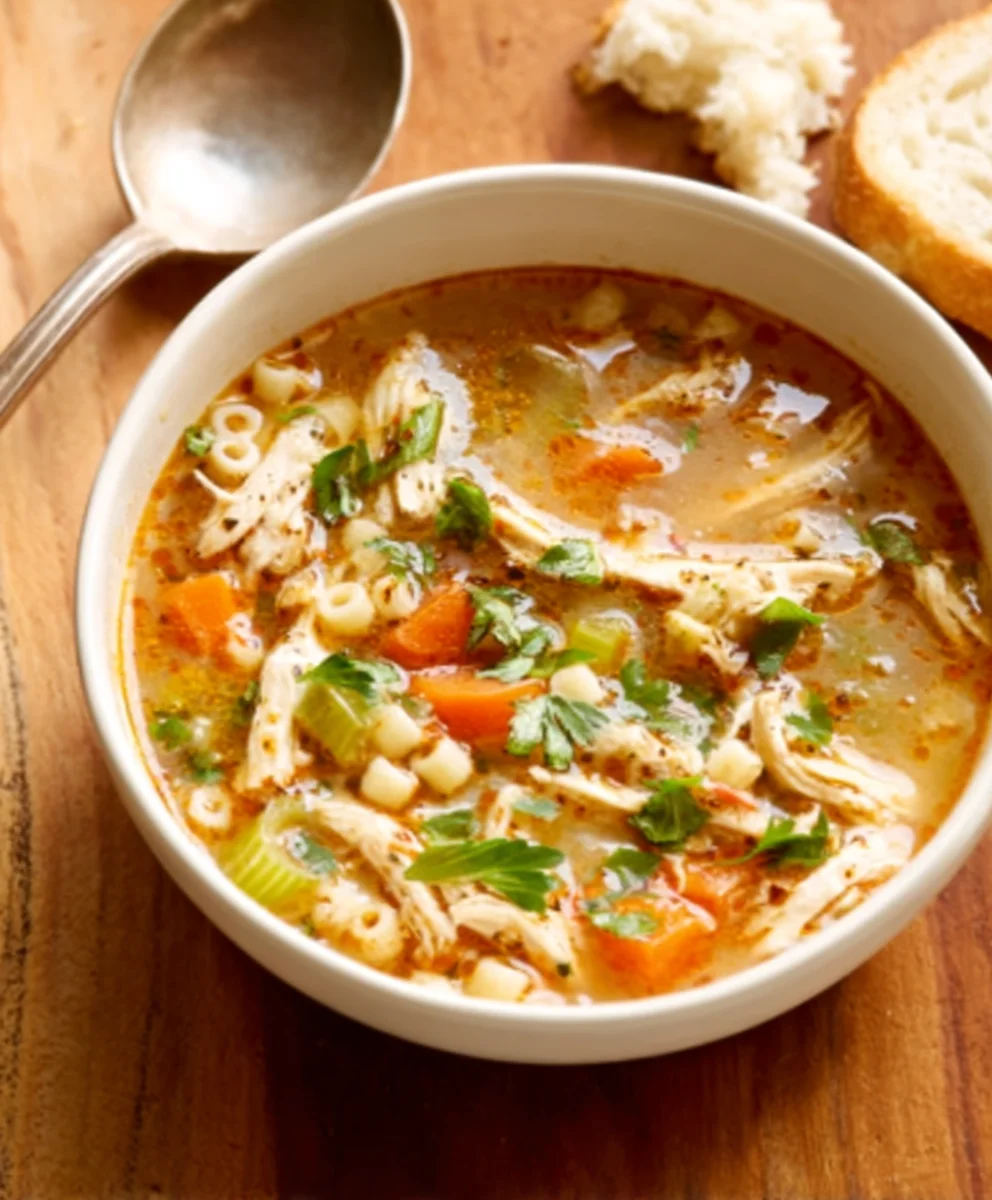
Before serving, remove and discard the bay leaves; they’ve done their job of infusing flavor and are no longer needed. Taste the soup and adjust the seasoning with more kosher salt and freshly ground black pepper as needed. This is your chance to make the soup perfect for your palate. Finally, stir in the fresh chopped Italian parsley. The parsley adds a burst of fresh, herbaceous flavor that complements the savory broth beautifully. Ladle the hot Sicilian Chicken Soup into bowls, ensuring each serving gets a piece of chicken, plenty of vegetables, potatoes, and pasta. Garnish with a little extra fresh parsley if desired.
Conclusion:
And there you have it – your very own delicious and comforting Sicilian Chicken Soup! This recipe is a testament to the simple yet profound flavors of Sicilian cuisine, bringin extractg together tender chicken, hearty vegetables, and aromatic herbs for a truly satisfying meal. I encourage you to give this Sicilian Chicken Soup a try; it’s perfect for a chilly evening, a light lunch, or whenever you need a bowl of pure comfort. Don’t be afraid to adjust the seasonings to your personal preference.
For serving, I love to pair this Sicilian Chicken Soup with crusty bread for dipping, a sprinkle of fresh parsley, or even a drizzle of good quality olive oil. If you’re feeling adventurous, consider adding a pinch of red pepper flakes for a hint of heat. This soup is also wonderfully versatile. Feel free to swap out vegetables based on what’s in season or your favorites – carrots, celery, and zucchini are all excellent additions. You could also try adding small pasta shapes like ditalini or orzo during the last 10 minutes of simmering for an even heartier soup.
Frequently Asked Questions:
Can I make this Sicilian Chicken Soup ahead of time?
Absolutely! In fact, like many soups, Sicilian Chicken Soup often tastes even better the next day as the flavors meld together. Store it in an airtight container in the refrigerator for up to 3-4 days. Reheat gently on the stovetop or in the microwave.
What kind of chicken is best for this soup?
You can use a variety of chicken cuts. Boneless, skinless chicken breasts or thighs are convenient and will cook quickly. For a richer flavor, you can also use bone-in chicken pieces and remove the bones and skin before shredding the meat. You could also use leftover rotisserie chicken.
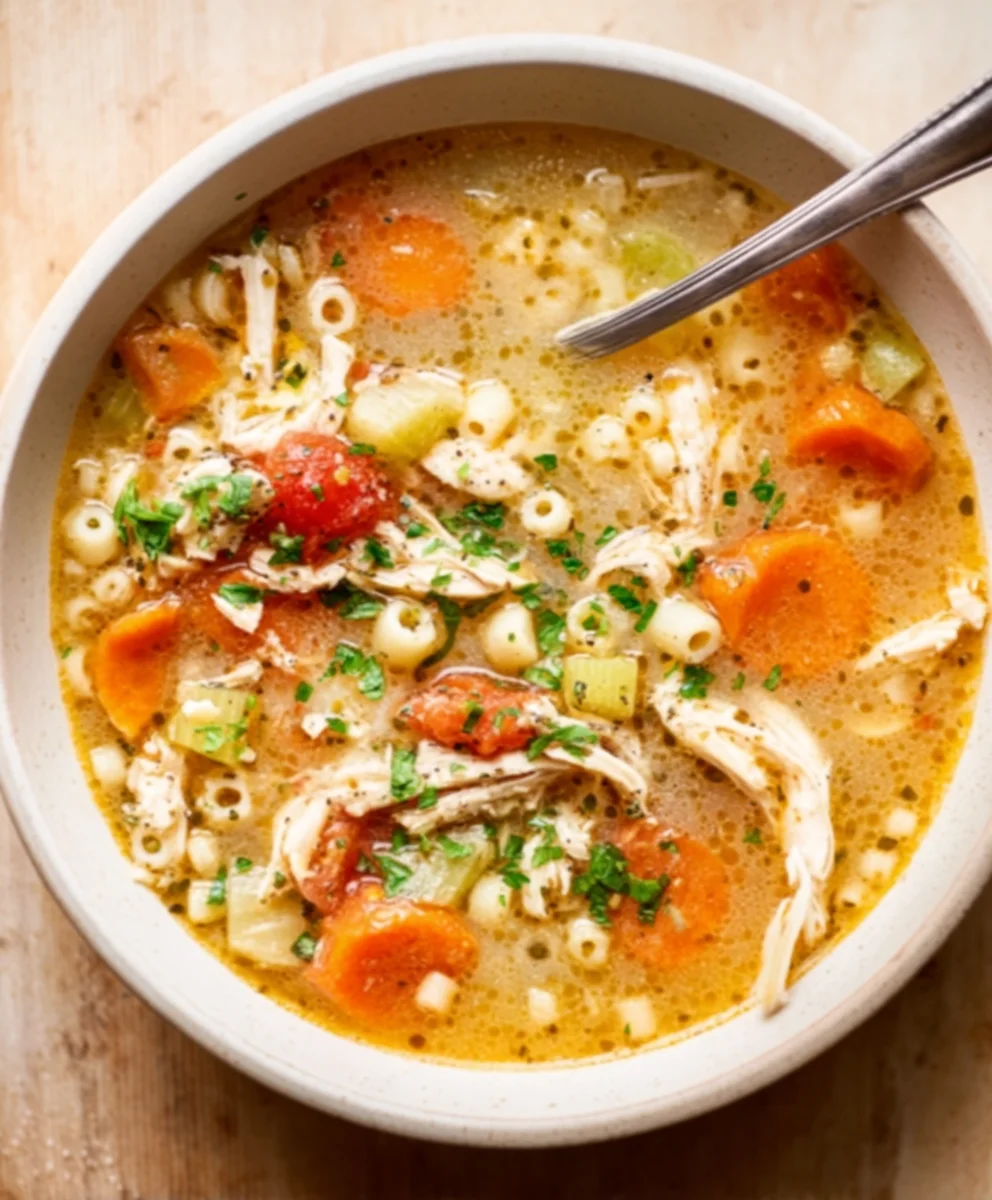
Sicilian Chicken Soup
An authentic and flavorful recipe for Sicilian Chicken Soup, packed with tender chicken, vegetables, and pasta.
Ingredients
-
4 bone-in, skin-on chicken thighs (about 2 pounds)
-
1 medium yellow onion, chopped (about 1 cup)
-
3 celery ribs, chopped (about 2 cups)
-
3 medium carrots, chopped (about 1 1/2 cups)
-
1 large yellow bell pepper, chopped
-
2 medium russet potatoes (approximately 1 pound total), peeled and cut into 3/4-inch cubes
-
4 cloves garlic, chopped
-
1 (14.5 ounce) can no-salt-added diced tomatoes, undrained
-
2 dry bay leaves
-
1 tablespoon kosher salt
-
1 (32 ounce) carton low-sodium chicken stock
-
4 cups water (or additional low-sodium chicken stock)
-
1/2 cup dry ditalini pasta
-
1/2 cup fresh chopped Italian parsley
-
Freshly ground black pepper, to taste
Instructions
-
Step 1
Pat chicken thighs dry, season with salt and pepper. Heat oil in a large pot over medium-high heat. Sear chicken skin-side down for 5-7 minutes, then flip and sear for 3-5 minutes. Remove chicken and set aside. -
Step 2
Pour off excess fat, leaving 1-2 tablespoons. Add onion, celery, and carrots to the pot. Cook over medium heat for 8-10 minutes until softened and onion is translucent. Add yellow bell pepper and cook for another 3-4 minutes. Stir in garlic and cook for 1 minute until fragrant. -
Step 3
Add diced tomatoes to the pot, scraping up browned bits. Pour in chicken stock and water. Add bay leaves and remaining kosher salt. Stir to combine. -
Step 4
Return chicken thighs to the pot, submerging them in the liquid. Bring to a simmer, then reduce heat to low, cover, and simmer for at least 30 minutes, or until chicken is cooked through. -
Step 5
Add cubed potatoes to the pot and simmer uncovered for 10-15 minutes until tender. Stir in ditalini pasta and cook for 8-10 minutes, or until al dente. Add more liquid if the soup becomes too thick. -
Step 6
Remove and discard bay leaves. Taste and adjust seasoning with salt and pepper. Stir in fresh chopped Italian parsley. Ladle soup into bowls and garnish with extra parsley if desired.
Important Information
Nutrition Facts (Per Serving)
It is important to consider this information as approximate and not to use it as definitive health advice.
Allergy Information
Please check ingredients for potential allergens and consult a health professional if in doubt.


Leave a Comment