

Miso soup recipe: a heartwarming bowl of comfort that’s incredibly simple to make at home. There’s a reason why this humble yet profound dish is a staple in Japanese cuisine and a beloved starter worldwide. It’s that perfect balance of savory, umami-rich depth from the miso paste, wonderfully enhanced by the delicate dashi broth.
What makes this miso soup recipe so special?
It’s more than just soup; it’s an experience. The gentle aroma, the satisfying warmth, and the delightful textures of silken tofu, tender wakame seaweed, and fresh scallions create a truly harmonious dish. Whether you’re looking for a light and healthy appetizer, a comforting breakfast, or a soothing accompaniment to your favorite sushi, this versatile miso soup recipe is your answer. Forget those instant packets; crafting authentic, delicious miso soup from scratch is surprisingly easy and infinitely more rewarding. Let’s dive in and create your own perfect bowl!

Miso Soup Recipe
There’s something incredibly comforting about a steaming bowl of miso soup. It’s a cornerstone of Japanese cuisine, a simple yet deeply flavorful broth that warms you from the inside out. Whether you’re enjoying it as a starter to a Japanese meal, as a light lunch, or even a late-night snack, this classic miso soup recipe is wonderfully easy to make at home and infinitely customizable. Forget those pre-packaged instant versions; the fresh, authentic taste of homemade miso soup is a game-changer. It’s a recipe that feels both nourishing and sophisticated, all while being incredibly straightforward. The beauty of this soup lies in its delicate balance of savory umami from the miso and dashi, with the subtle brininess of the seaweed and the soft texture of the tofu. Let’s dive in and create this delicious staple!
Ingredients:
Crafting Your Comforting Miso Soup
Making this delicious miso soup is a wonderfully meditative process, and the results are so rewarding. We’ll start with the foundational element: the dashi.
Preparing the Dashi and Seaweed
1. Begin extract by preparing your dashi. If you’re using instant dashi granules, simply follow the package instructions to reconstitute it with hot water. If you’re making dashi from scratch (using kombu and katsuobushi), ensure it’s simmering gently and has developed its characteristic delicate flavor. For this recipe, we need 2½ cups of prepared dashi. While the dashi is heating, take your dried seaweed and place it in a small bowl. Add a little warm water to rehydrate it. You’ll notice it expands quite a bit and becomes tender and slightly gelatinous. Once rehydrated, gently squeeze out any excess water. This step ensures the seaweed isn’t overly salty and has a pleasant texture in the soup. It adds a wonderful depth of flavor and a lovely chegrape juicess.
Warming the Tofu and Flavor Base
2. Once your dashi is warm (but not yet boiling), gently add the pieces of silken tofu to the pot. Be careful as silken tofu is delicate and can break apart easily. Allow the tofu to heat through in the dashi for a couple of minutes. You don’t want to aggressively boil the dashi at this stage, as it can diminish the subtle flavors. This gentle warming ensures the tofu is pleasingly soft and warm without becoming mushy. The dashi will begin extract to take on a slightly richer quality as it infuses with the tofu.
Infusing the Miso Magic
3. This is where the magic truly happens! Now, it’s time to incorporate the miso paste. It’s crucial to add the miso paste towards the end of the cooking process and, importantly, never to boiling liquid. Boiling miso can destroy its delicate probiotics and alter its nuanced flavor profile, often making it taste bitter. So, reduce the heat to very low, or even turn it off for a moment if your dashi is still quite hot. Take a ladleful of the warm dashi from the pot and place it in a small bowl. Add your miso paste to this bowl. Using a whisk or chopsticks, stir the miso paste into the warm dashi until it forms a smooth, lump-free paste. This is called “tempering” the miso, and it ensures it dissolves evenly into the soup without clumping. Start with 2 tablespoons of miso paste, and you can always add more to taste later if you prefer a stronger flavor.
Bringin extractg It All Together
4. Once your miso paste is completely dissolved in the small bowl, gently pour this mixture back into the main pot of dashi, tofu, and seaweed. Stir very gently to distribute the miso evenly throughout the soup. Now, allow the soup to heat through on very low heat for another minute or two. Again, the key here is to avoid boiling. You’re just looking for the soup to be perfectly hot and for all the flavors to meld together beautifully. This gentle heating process preserves the integrity of the miso’s complex taste and aroma. You’ll notice the soup taking on that characteristic opaque, creamy appearance of authentic miso soup.
The Finishing Touch
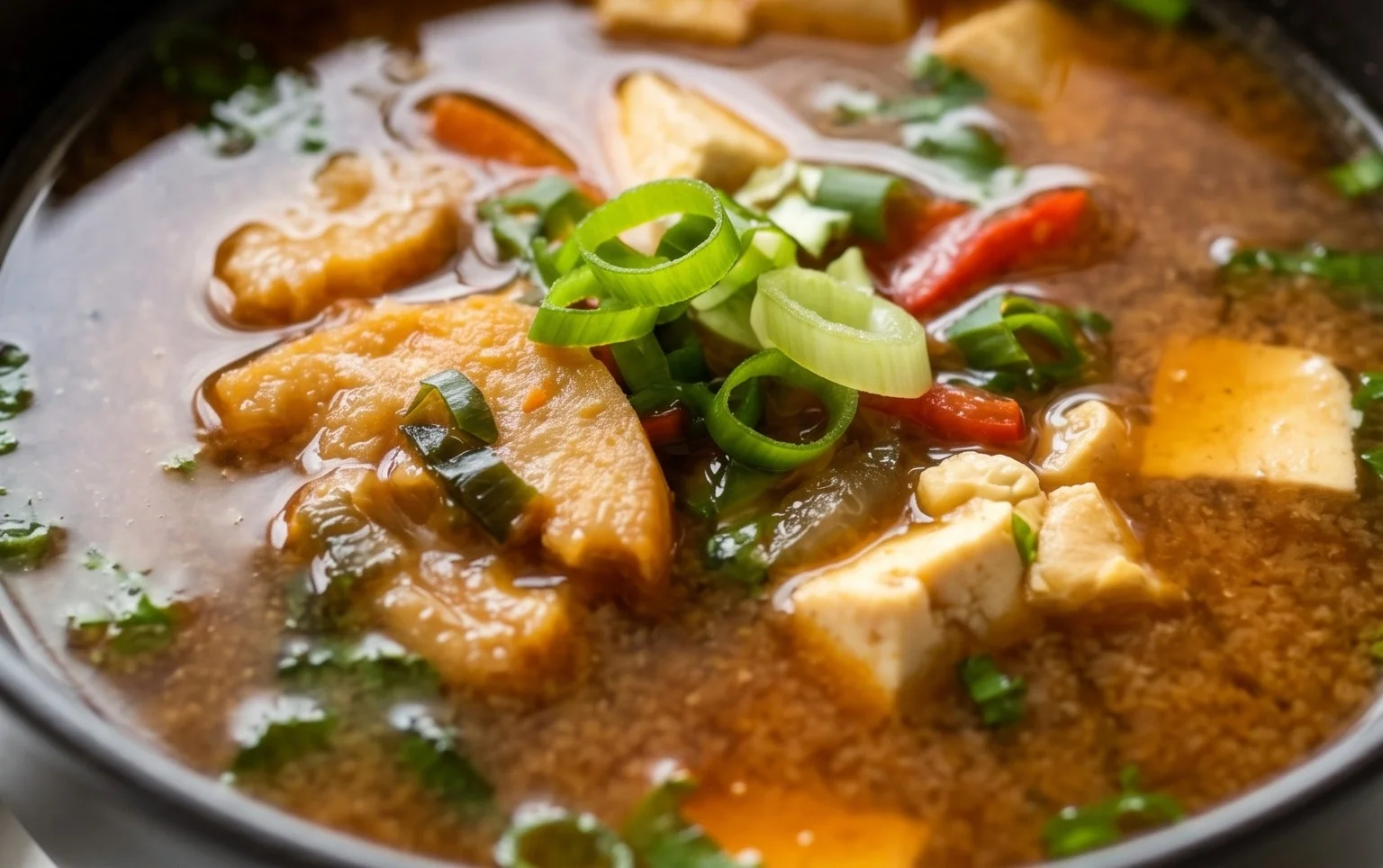
5. Just before serving, stir in the rehydrated, drained seaweed. This adds a final layer of texture and a subtle ocean-like brininess. Ladle the hot miso soup into individual serving bowls. Garnish generously with the freshly chopped scallions. The bright green of the scallions adds a pop of color and a fresh, sharp contrast to the savory broth. Serve immediately and savor the simple, profound goodness of your homemade miso soup. You can adjust the amount of miso paste to your preference after tasting. Some people like a more robust, salty broth, while others prefer a lighter, more delicate flavor. Enjoy this warming, nourishing bowl!
Conclusion:
And there you have it! A truly simple yet profoundly flavorful Miso Soup Recipe that’s perfect for any occasion. This recipe is fantastic because it’s incredibly versatile, quick to prepare, and delivers a deeply satisfying umami-rich broth that warms you from the inside out. Whether you’re looking for a light starter, a comforting lunch, or a healthy side dish, miso soup always hits the spot.
To elevate your experience, consider serving it with a side of steamed rice, some grilled fish, or even a simple salad. For variations, don’t be afraid to experiment! Add silken tofu for extra protein, a sprinkle of toasted sesame seeds for crunch, or a few drops of chili oil for a spicy kick. You can also swap out the seaweed for thinly sliced mushrooms or add some blanched greens like spinach or bok choy. I truly encourage you to give this recipe a try; it’s a gateway to exploring the wonderful world of Japanese cuisine and a staple you’ll return to again and again.
Frequently Asked Questions:
What is miso paste and where can I find it?
Miso paste is a traditional Japanese seasoning produced by fermenting soybeans with salt and koji (a type of fungus). It has a savory, umami-rich flavor and comes in various types like white (shiro) miso, red (aka) miso, and mixed (awase) miso, each offering a slightly different taste profile and color. You can typically find miso paste in the international aisle of most major grocery stores, Asian markets, or specialty food stores.
Can I make this miso soup vegan?
Absolutely! Our recipe is inherently vegan-friendly if you use vegetable broth instead of dashi made with bonito flakes. Ensure your miso paste is also vegan (most are, but it’s always good to check the ingredients). The seaweed and tofu options also align perfectly with a vegan diet, making this a delicious and accessible choice for everyone.
Miso Soup Recipe
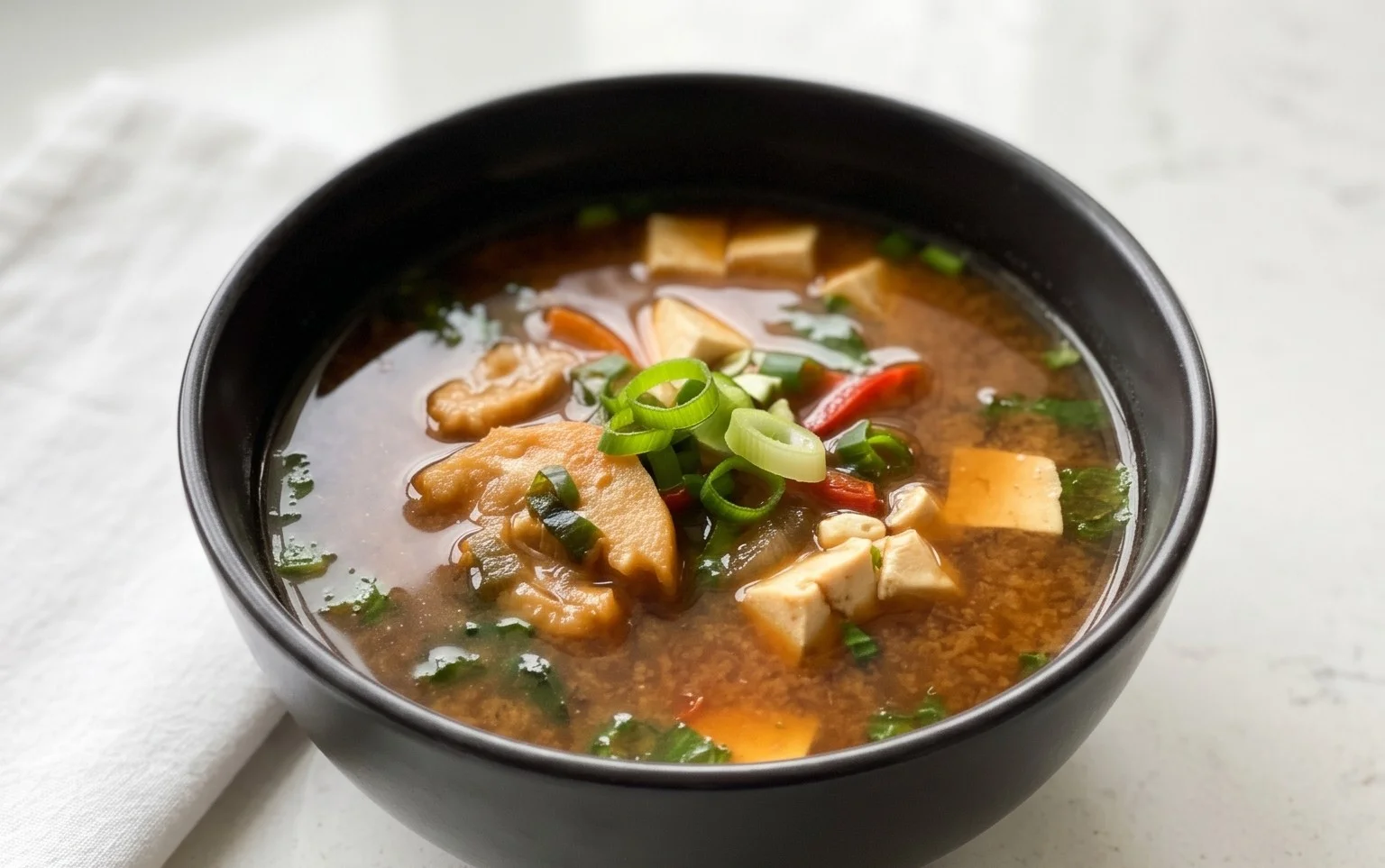
A simple and quick recipe for classic Japanese miso soup, customizable to your taste.
Ingredients
-
2½ cups Dashi
-
1 heaping tablespoon dried seaweed
-
4 oz silken tofu (cut into small pieces)
-
2-2½ tablespoons white miso paste (or to taste)
-
1 tablespoon scallion (chopped)
Instructions
-
Step 1
Rehydrate the dried seaweed in a small bowl of water for about 5 minutes, then drain. -
Step 2
In a medium saucepan, bring the Dashi to a gentle simmer over medium heat. -
Step 3
Add the rehydrated seaweed to the simmering Dashi. -
Step 4
In a separate small bowl, whisk the miso paste with a ladleful of the hot Dashi until smooth. This prevents clumps. -
Step 5
Gently add the silken tofu pieces to the saucepan. Heat through for about 1-2 minutes. -
Step 6
Stir the dissolved miso mixture into the soup. Do not boil after adding miso, as this can diminish its flavor and health benefits. -
Step 7
Ladle the soup into bowls and garnish with chopped scallions before serving.
Important Information
Nutrition Facts (Per Serving)
It is important to consider this information as approximate and not to use it as definitive health advice.
Allergy Information
Please check ingredients for potential allergens and consult a health professional if in doubt.



Leave a Comment