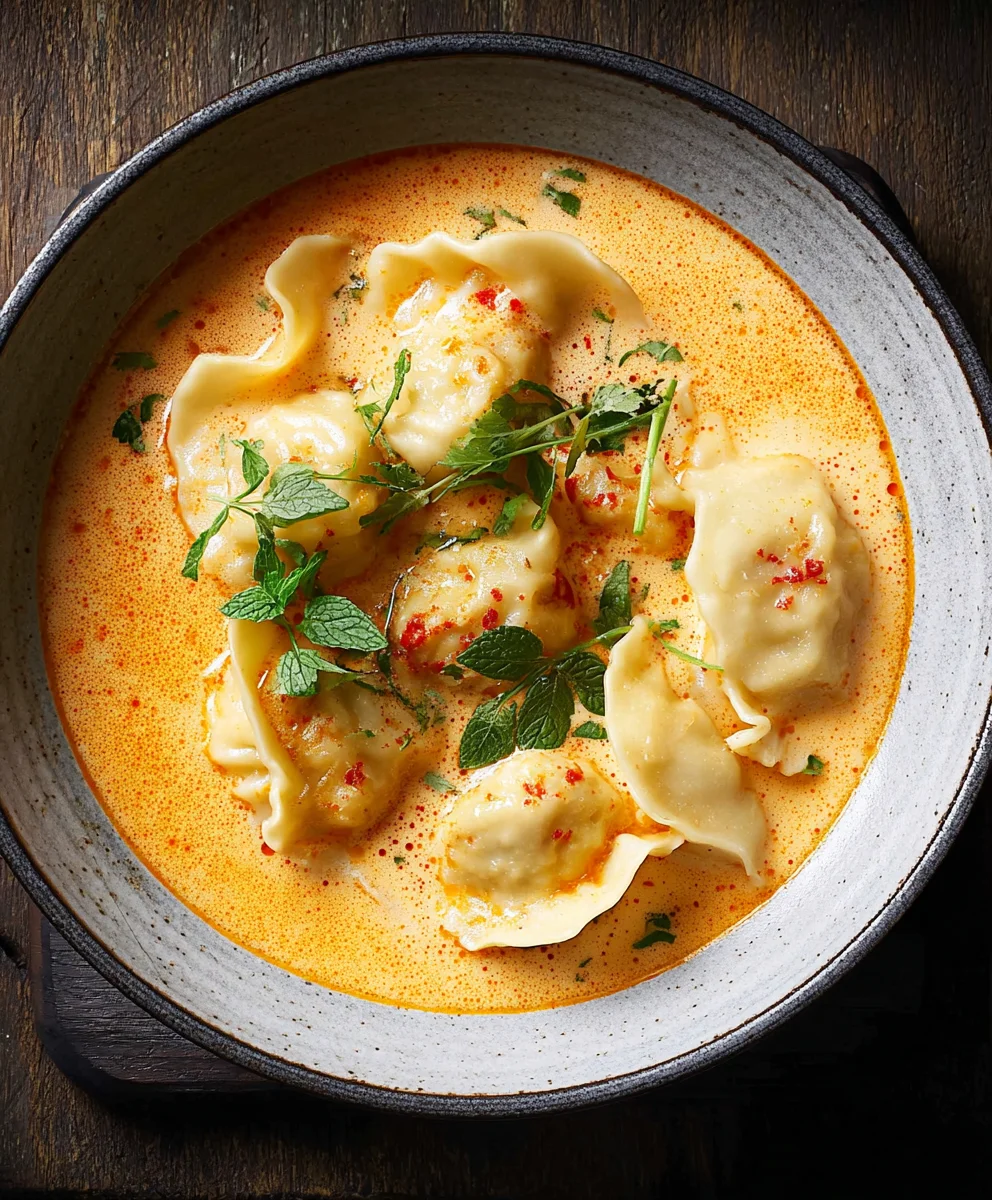
Thai Coconut Curry Dumpling Soup is more than just a meal; it’s an experience for your senses. Imagin extracte a steaming bowl brimming with tender dumplings, swimming in a rich, fragrant broth that whispers tnon-alcoholic ales of the exotic. This dish has captured the hearts (and stomachs!) of food lovers everywhere for good reason. It masterfully blends the comforting embrace of dumplings with the vibrant, complex flavors of a classic Thai curry, all elevated by the creamy, luxurious texture of coconut milk. What makes this Thai Coconut Curry Dumpling Soup so special is its perfect harmony of sweet, savory, spicy, and tangy notes. Each spoonful is an adventure, delivering a comforting warmth that’s both invigorating and deeply satisfying, making it the ultimate comfort food with a worldly twist.

Ingredients:
- 20 gyozas (or potstickers)
- 1 tablespoon vegetable oil
- 4 garlic cloves, grated
- 1 teaspoon grated gin extractger
- 4 cups chicken broth
- 1 can (14 ounces / 400 ml) unsweetened full-fat coconut milk
- 1 tablespoon low sodium soy sauce
- 1 tablespoon fish sauce
- 1 teaspoon toasted sesame oil
- 3 tablespoons Thai red curry paste
- 1 teaspoon brown sugar
- 2 tablespoons lime juice
- Chopped chives, for serving
- Your favorite vegetables (optional, for serving)
Preparing the Aromatic Base
Sautéing the Aromatics
The foundation of any great soup starts with building layers of flavor, and for our Thai Coconut Curry Dumpling Soup, that means beautifully sautéed aromatics. Grab a large pot or Dutch oven and place it over medium heat. Add the 1 tablespoon of vegetable oil. Once the oil is shimmering and just starting to look a little slippery, it’s time to introduce your aromatics. Add the 4 grated garlic cloves and the 1 teaspoon ofgin extractated ginger. Stir them constantly with a wooden spoon or spatula. You want to cook them for about 1 to 2 minutes, just until they become fragrant. Be careful not to let them brown or burn, as this can impart a bitter taste to your finished soup. The goal here is to gently coax out their delicious essential oils and soften them. You’ll notice a wonderful aroma filling your kitchen, signaling that you’re on the right track. This step is quick but crucial for developing the depth of flavor in the curry broth.
Building the Flavorful Broth
Infusing the Curry Paste
Now that gin extractr garlic and ginger are beautifully fragrant, it’s time to bring in the star of our Thai-inspired flavors: the Thai red curry paste. Add the 3 tablespoons of Thai red curry paste to the gin extract with the garlic and ginger. Stir it well into the oil and aromatics. Continue to cook, stirring frequently, for another 1 to 2 minutes. This process is called “blooming” the curry paste. Blooming helps to release the complex spices and oils within the paste, intensifying their flavor and aroma. You’ll notice the paste will deepen in color and become even more fragrant. It’s a transformative step that really unlocks the full potential of the curry paste and ensures a rich, vibrant flavor in your soup. Don’t rush this part; it’s a key element for that authentic Thai taste.
Adding the Liquids and Seasonings
Once the curry paste is bloomed, it’s time to build the soup’s liquid base. Pour in the 4 cups of chicken broth, scraping up any bits that might be stuck to the bottom of the pot – that’s concentrated flavor! Next, add the 1 can (14 ounces / 400 ml) of unsweetened full-fat coconut milk. Using full-fat coconut milk is important here for a creamy, luxurious texture and a rich mouthfeel. Stir everything together thoroughly. Now, it’s time for the umami boosters: add the 1 tablespoon of low sodium soy sauce and the 1 tablespoon of fish sauce. These two ingredients provide that signature savory depth that is characteristic of many Southeast Asian cuisines. Finally, stir in the 1 teaspoon of brown sugar. The sugar might seem counterintuitive in a savory dish, but it plays a vital role in balancing the heat gin extractm the curry paste and the tanginess of the lime juice, creating a well-rounded flavor profile. Bring this mixture to a gentle simmer over medium-high heat, stirring occasionally.
Simmering and Adding the Dumplings
Simmering the Broth to Perfection
Once the broth has reached a gentle simmer, reduce the heat to low, cover the pot, and let it cook for at least 10 to 15 minutes. This simmering time is essential for allowing all the flavors to meld together beautifully. It gives the curry paste, the aromatics, and the seasonings ample time to infuse into the broth, creating a complex and deeply satisfying soup base. While the broth is simmering, this is also a perfect opportunity to prepare any optional vegetables you might want to add. If you’re using quick-cooking vegetables like spinach, sliced mushrooms, or snow peas, you can add them in the final few minutes of simmering. For heartier vegetables like broccoli florets or diced carrots, you might want to add them a bit earlier, depending on how tender you like them.
Cooking the Dumplings
After the broth has simmered and the flavors have melded, it’s time to add the star protein of our soup: the dumplings. Carefully add the 20 gyozas (or potstickers) directly into the simmering broth. Don’t overcrowd the pot; if your pot is smaller, you might need to cook them in batches to ensure they cook evenly. Gently stir them to make sure they are submerged in the broth and not sticking to each other or the bottom of the pot. The cooking time for dumplings can vary depending on the brand and type, but generally, they will float to the surface when they are cooked through. This usually takes about 5 to 8 minutes. You want them to be tender and heated all the way through. While the dumplings are cooking, stir in the 1 teaspoon of toasted sesame oil. This adds a wonderful nutty aroma and flavor that complements the curry beautifully.
Finishing Touches and Serving
Adding Freshness and Zest
Just before serving, it’s time to add a burst of brightness that will lift all the rich flavors of the soup. Turn off the heat under the pot. Stir in the 2 tablespoons of fresh lime juice. The acidity from the lime is crucial for cutting through the richness of the coconut milk and balancing the spiciness of the curry. It adds a vibrant, zesty finish that makes the soup incredibly refreshing. Taste the soup at this point and adjust the seasonings if necessary. You might want a little more soy sauce for saltiness, a touch more fish sauce for umami, or a pinch more sugar to round out the flavors.
Garnishing for Presentation and Flavor
Ladle the hot Thai Coconut Curry Dumpling Soup into individual bowls. Ensure each bowl gets a generous portion of the flavorful broth, tender dumplings, and any added vegetables. For a beautiful presentation and an extra layer of flavor, generously sprinkle the chopped chives over the top of each serving. The fresh, oniony bite of the chives provides a delightful contrast to the warm, rich soup. If you have any extra lime wedges, a small wedge on the side of the bowl for guests to squeeze in more lime juice is always a welcome touch. Serve immediately and enjoy the comforting, aromatic, and delicious experience of this Thai Coconut Curry Dumpling Soup.
Conclusion:
There you have it – your guide to crafting a truly delightful Thai Coconut Curry Dumpling Soup! This recipe brings together the comforting embrace of tender dumplings with the vibrant, aromatic flavors of a creamy coconut curry broth. It’s a dish that’s both incredibly satisfying and surprisingly simple to whip up, perfect for a weeknight meal or an impressive appetizer for guests. Don’t be afraid to get creative with your serving! I love topping mine with fresh cilantro, a squeeze of lime, and a sprinkle of toasted sesame seeds for an extra pop of flavor and texture. Feel free to experiment with different proteins like shrimp or chicken, or add in your favorite vegetables such as snow peas, broccoli florets, or sliced bell peppers to make it your own. The beauty of this Thai Coconut Curry Dumpling Soup lies in its adaptability. So, dive in, have fun in the kitchen, and enjoy every flavorful spoonful of this wonderful creation!
Frequently Asked Questions:
Can I make the dumplings ahead of time?
Absolutely! You can prepare the dumpling filling and assemble the dumplings a day in advance. Store them on a lightly floured plate or baking sheet, covered loosely with plastic wrap, in the refrigerator. Cook them as directed in the recipe when you’re ready to serve.
What kind of dumplings are best for this soup?
While this recipe is written with store-bought potstickers or gyoza in mind for ease, feel free to use homemade dumplings if you have a favorite recipe. Any type of dumpling that you enjoy will work wonderfully in this flavorful broth, from beef and vegetable to chicken or shrimp varieties.
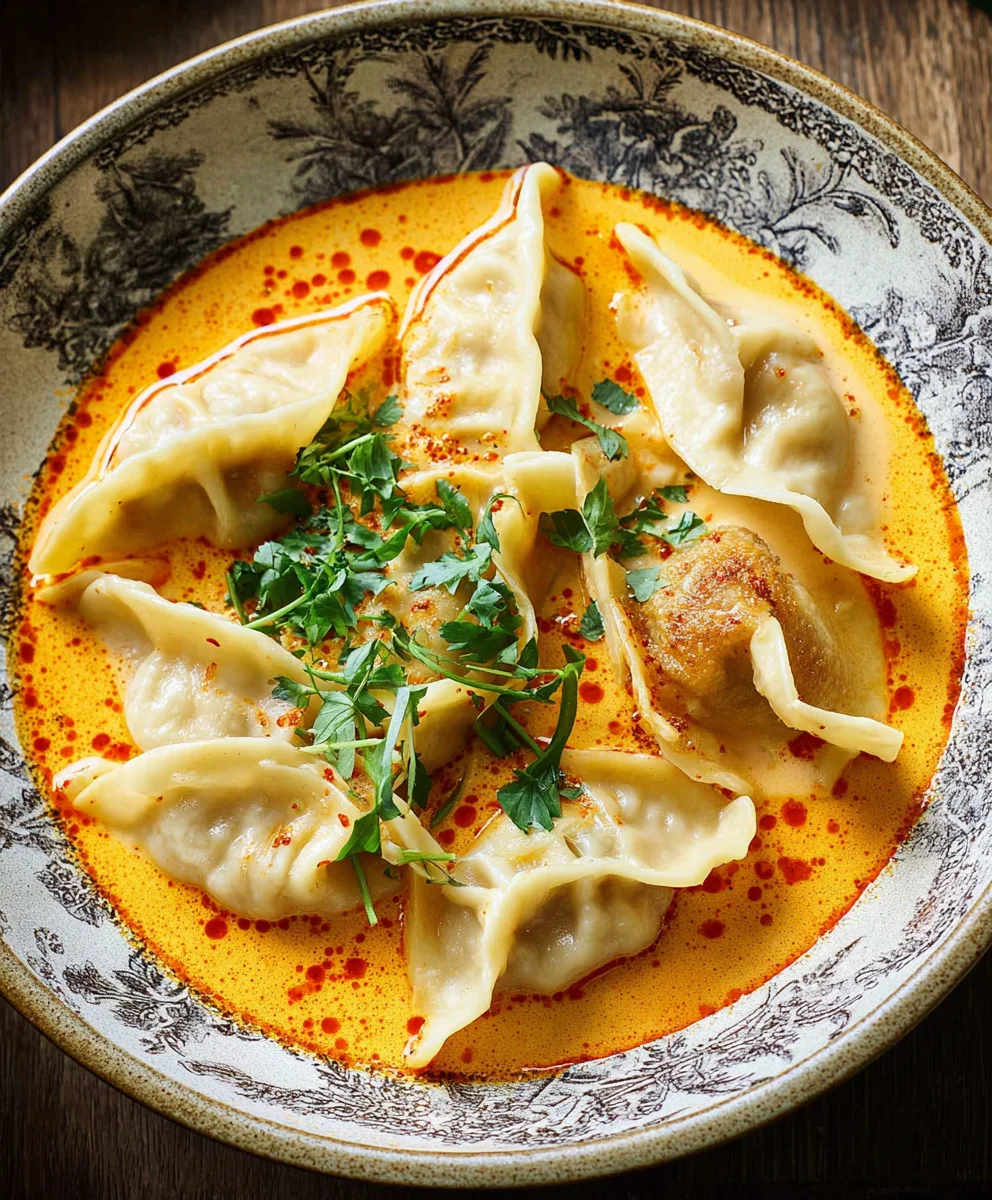
Spicy Thai Coconut Beef Dumpling Soup
An easy and flavorful dinner featuring tender beef dumplings in a rich, spicy Thai red curry coconut broth. Perfect for a quick and satisfying meal.
Ingredients
-
20 beef potstickers (or gyozas)
-
1 tablespoon vegetable oil
-
4 garlic cloves, grated
-
1 teaspoon grated ginger
-
4 cups chicken broth
-
1 can (14 ounces / 400 ml) unsweetened full-fat coconut milk
-
1 tablespoon low sodium soy sauce
-
1 tablespoon fish sauce
-
1 teaspoon toasted sesame oil
-
3 tablespoons Thai red curry paste
-
1 teaspoon brown sugar
-
2 tablespoons lime juice
-
Chopped chives, for serving
-
Your favorite vegetables (optional, for serving)
Instructions
-
Step 1
In a large pot or Dutch oven over medium heat, add 1 tablespoon of vegetable oil. Once shimmering, add 4 grated garlic cloves and 1 teaspoon of grated ginger. Sauté for 1-2 minutes until fragrant, being careful not to burn. -
Step 2
Add 3 tablespoons of Thai red curry paste to the pot and stir into the aromatics. Cook for another 1-2 minutes, stirring frequently, until fragrant and slightly darkened, to bloom the paste. -
Step 3
Pour in 4 cups of chicken broth, scraping up any browned bits. Add 1 can (14 oz/400 ml) of unsweetened full-fat coconut milk, 1 tablespoon of low sodium soy sauce, 1 tablespoon of fish sauce, and 1 teaspoon of brown sugar. Stir to combine and bring to a gentle simmer over medium-high heat. -
Step 4
Reduce heat to low, cover, and simmer for 10-15 minutes to allow flavors to meld. If adding optional quick-cooking vegetables, add them in the last few minutes of simmering. -
Step 5
Carefully add 20 beef potstickers to the simmering broth. Cook for 5-8 minutes, or until they float to the surface and are heated through. Stir in 1 teaspoon of toasted sesame oil while dumplings cook. -
Step 6
Turn off the heat. Stir in 2 tablespoons of fresh lime juice. Taste and adjust seasonings if needed. Ladle soup into bowls and garnish with chopped chives. Serve immediately.
Important Information
Nutrition Facts (Per Serving)
It is important to consider this information as approximate and not to use it as definitive health advice.
Allergy Information
Please check ingredients for potential allergens and consult a health professional if in doubt.
Leave a Comment