
Homemade pâtes de fruits, without the corn syrup, are little jewels of pure fruit flavor, a delightful treat that transports me straight to sun-drenched orchards with every bite. For years, I’ve been captivated by the intense, vibrant taste of these fruit jellies, a far cry from the often-muted flavors of commercially produced candies. What truly makes these homemade pâtes de fruits special is their unadulterated essence. We’re talking about capturing the very soul of the fruit – the tartness of raspberries, the tropical sweetness of mango, the delicate perfume of apricot – and transforming it into a perfectly chewy, utterly satisfying confection. The absence of corn syrup elevates them further, allowing the natural fruit sugars and vibrant flavors to shine through, creating a taste that is both sophisticated and incredibly comforting. If you’ve ever dreamt of crafting your own exquisite fruit candies, bursting with authentic taste and a delightful texture, then join me on this journey to create the most magnificent homemade pâtes de fruits.

Homemade Pâtes de Fruits (No Corn Syrup)
There’s something truly magical about a perfectly crafted pâte de fruits. These vibrant, chewy fruit jellies are a delightful treat, bursting with concentrated fruit flavor. Traditionally, they often rely on corn syrup to achieve that signature texture and prevent crystallization. However, I’ve found a way to create these little gems without it, using classic pectin and a bit of patience. The result is a purer, more intense fruit experience that’s surprisingly achievable at home.
Making your own pâtes de fruits might seem intimidating, but it’s a wonderfully rewarding process. The key is to understand how the pectin works and to control the cooking temperature accurately. Once you’ve mastered the basics, you can experiment with an endless array of fruit juices, creating your own signature flavors. Imagin extracte sharing these beautiful, homemade confections with friends and family – they are always a showstopper!
Ingredients:
*Note on Pectin: For this recipe, it’s crucial to use “classic” or “low-sugar” pectin, often found in the canning aisle of your grocery store or specialty baking shops. This type of pectin is designed to gel at higher sugar concentrations and requires precise cooking to activate. Avoid “instant” or “no-sugar-needed” pectin, as it will not work correctly in this recipe.
Cooking Instructions:
1. Prepare Your Equipment: Before you begin extract, gather all your necessary tools. You’ll need a medium-sized, heavy-bottomed saucepan, a reliable candy thermometer, a flexible spatula or wooden spoon, and an 8×8 inch baking dish lined with parchment paper. Lightly grease the parchment paper with a neutral oil or cooking spray; this will prevent the cooked pâtes de fruits from sticking. Ensure your sugar for coating is readily available in a shallow dish. Having everything prepped will make the cooking process much smoother.
2. Combine Pectin and Sugar: In a small bowl, thoroughly whisk together the 3 tablespoons of classic pectin and 1/2 cup of the granulated sugar. It’s essential to combine them well at this stage to prevent the pectin from clumping when it hits the hot liquid. This sugar-pectin mixture acts as a barrier, allowing the pectin granules to disperse evenly in the juice without forming lumps. Think of it as pre-hydrating the pectin with sugar.
3. Heat the Fruit Juice: Pour your 2 cups of fruit juice into the heavy-bottomed saucepan. Add the remaining 1/2 cup of granulated sugar and the 1 tablespoon of freshly squeezed lemon juice. Place the saucepan over medium heat. Stir constantly with your spatula or wooden spoon, ensuring the sugar dissolves completely. You want the mixture to come to a gentle simmer, but not a rolling boil just yet. The lemon juice adds a touch of acidity which helps the pectin to set effectively and also brightens the fruit flavor.
4. Incorporate the Pectin Mixture and Boil: Once the fruit juice mixture is simmering, gradually whisk in the pectin-sugar mixture. Continue whisking vigorously for at least 1 to 2 minutes. It’s crucial to stir continuously to ensure the pectin is fully incorporated and to prevent any lumps from forming. Now, increase the heat slightly to medium-high. Bring the mixture to a full, rolling boil that cannot be stirred down. Attach your candy thermometer to the side of the pan, ensuring the tip is submerged in the liquid but not touching the bottom. You are aiming for a specific temperature that indicates the pectin has been fully activated.
5. Cook to Temperature: This is the most critical step for achieving the right texture. Once the mixture reaches a rolling boil, continue to cook, stirring constantly, until the candy thermometer registers 220°F (104°C). This process can take several minutes. Maintaining a constant boil and stirring is key to developing the gel structure and ensuring a firm, yet yielding, texture. Avoid overcooking, as this can lead to a brittle, sugary result. If you undercook, your pâtes de fruits may be too soft or sticky. Be patient, watch the thermometer closely, and stir diligently. Once the desired temperature is reached, immediately remove the saucepan from the heat.
6. Pour and Set: Carefully and quickly pour the hot fruit mixture into your prepared 8×8 inch baking dish. Work swiftly as the mixture will begin extract to set as it cools. You can gently tilt the dish to ensure an even layer. Allow the mixture to cool at room temperature for about 30 minutes, then cover it loosely with plastic wrap and refrigerate for at least 4 hours, or preferably overnight. This long, slow setting period is essential for the pâtes de fruits to firm up properly and develop their signature texture.
7. Cut and Coat: Once the fruit jelly has fully set and is firm to the touch, it’s time to cut it into individual pieces. Lightly dust a clean cutting board with some of the extra granulated sugar. Use a sharp knife (dipped in hot water and dried if it’s sticking) to cut the jelly into desired shapes – squares, diamonds, or even little rectangles. Once cut, immediately toss each piece in the waiting sugar, ensuring they are well coated on all sides. This sugar coating prevents them from sticking to each other and adds a delightful crunch. Store your finished pâtes de fruits in an airtight container at room temperature. They should keep well for several weeks. Enjoy your homemade, corn syrup-free fruit jellies!
Conclusion:
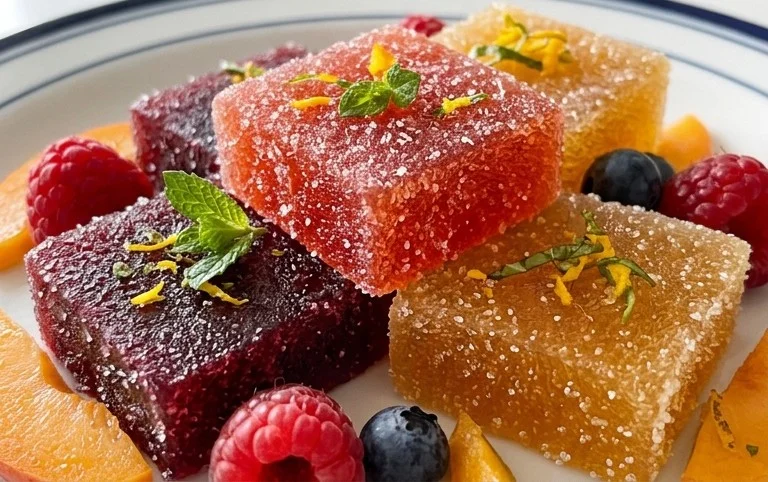
Congratulations on making it to the end! I hope this recipe for homemade pâtes de fruits without corn syrup has inspired you. What’s truly wonderful about this method is its simplicity and the pure, unadulterated fruit flavor you achieve. By ditching the corn syrup, you’re allowing the vibrant essence of your chosen fruits to truly shine, resulting in a delightful chewy candy that’s both sophisticated and incredibly satisfying to make yourself. The process is surprisingly straightforward, and the results are truly gourmet, proving you don’t need fancy ingredients to create something special.
These beautiful pâtes de fruits are perfect for gifting, elevating a cheese board, or simply enjoying as a delightful sweet treat. Serve them alongside fresh fruit, a rich espresso, or as a light dessert after a hearty meal. Don’t be afraid to experiment with different fruit combinations! Think of tangy raspberry and lime, sweet mango and passionfruit, or even a more unusual combination like fig and orange. The possibilities are endless!
I highly encourage you to give this recipe a try. It’s a rewarding experience that yields delicious results, and you’ll feel a real sense of accomplishment. Enjoy the process and savor every fruity bite!
Frequently Asked Questions:
Why is avoiding corn syrup beneficial for pâtes de fruits?
Avoiding corn syrup allows the natural flavor of the fruit to be the star of the show. Corn syrup can sometimes mute delicate fruit notes and contribute to an overly cloying sweetness. Using sugar and pectin creates a cleaner, more intense fruit taste that is truly the essence of pâtes de fruits.
How should I store my homemade pâtes de fruits?
Once your pâtes de fruits have cooled and set, you can store them in an airtight container at room temperature. It’s best to layer them with parchment paper to prevent sticking. They should stay fresh for about 1-2 weeks, though their chewy texture might soften slightly over time.
Can I use other fruits besides those mentioned?
Absolutely! This recipe is incredibly versatile. Feel free to use any fruit you love, as long as it has a good amount of natural pectin or you’re willing to supplement with commercial pectin. Berries, stone fruits, citrus, tropical fruits – the sky’s the limit!
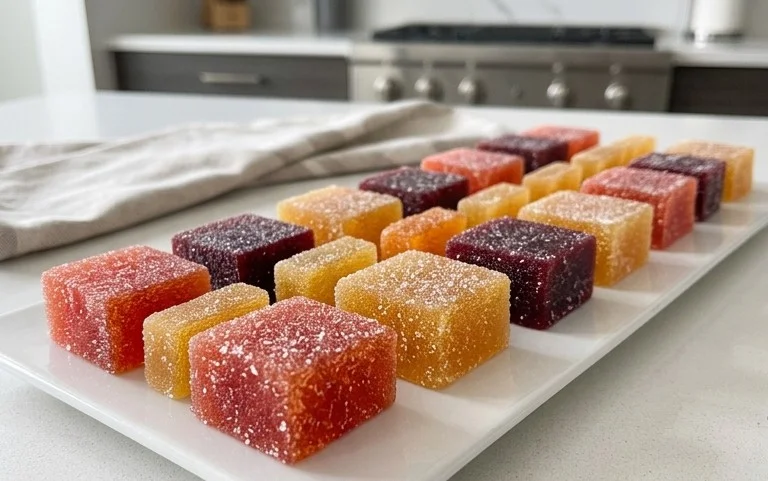
Homemade Pâtes de Fruits (no corn syrup)
Delicious and chewy fruit jellies made from scratch without using corn syrup. Perfect for a homemade candy treat.
Ingredients
-
2 cups fruit juice (orange and pomegranate)
-
1 cup granulated sugar, plus more for coating
-
3 tablespoons classic pectin
-
1 tablespoon freshly squeezed lemon juice
Instructions
-
Step 1
In a medium saucepan, whisk together the fruit juice, granulated sugar, and lemon juice. Sprinkle the pectin over the mixture and whisk until fully incorporated and no lumps remain. -
Step 2
Place the saucepan over medium heat and bring the mixture to a boil, stirring constantly. -
Step 3
Once boiling, continue to cook and stir for 1 minute. The mixture should thicken noticeably. -
Step 4
Pour the hot mixture into a parchment-lined 8×8 inch baking dish. Ensure the parchment paper extends up the sides for easy removal. -
Step 5
Allow the mixture to cool completely at room temperature, then transfer to the refrigerator for at least 4 hours, or until firm. -
Step 6
Once firm, lift the fruit jelly out of the baking dish using the parchment paper. Cut into desired shapes (squares or fruit shapes) using a sharp knife or cookie cutters. -
Step 7
Toss the cut pâtes de fruits in granulated sugar to coat them evenly. Store in an airtight container at room temperature.
Important Information
Nutrition Facts (Per Serving)
It is important to consider this information as approximate and not to use it as definitive health advice.
Allergy Information
Please check ingredients for potential allergens and consult a health professional if in doubt.

Leave a Comment