
German Pancakes are more than just breakfast; they’re an experience. Imagine a dish that transforms from a simple batter into a golden, puffy masterpiece right before your eyes, a culinary magic trick that never fails to impress. What is it about these delightful creations that has captured hearts and kitchens worldwide? It’s the sheer drama of their ascent in the oven, the way they rise around the edges like a soft, edible cloud, and the wonderfully custardy center that melts in your mouth with every bite. This isn’t your average stack of flapjacks; German Pancakes offer a uniquely satisfying texture, a delightful balance of eggy richness and subtle sweetness that makes them perfect for any occasion, from a leisurely Sunday brunch to a special weeknight treat. Prepare to fall in love with the effortless elegance and incredible flavor of a truly special German Pancake.

Ingredients:
- 6 large eggs
- 1 cup milk (240 ml)
- 1 cup all-purpose flour (120 g)
- dash salt
- 1 teaspoon vanilla extract (5 ml)
- 5 Tablespoons butter (70 g)
Preparing the Batter
This is where the magic begins for our delicious German Pancakes. A well-prepared batter is key to achieving that beautiful puffy rise and delicate texture. First, gather all your ingredients. Having everything measured out and ready to go will make the process smooth and enjoyable. I like to use a large mixing bowl for this step. Crack all 6 of your large eggs into the bowl. Don’t worry about being too precise with the yolk breaking; they’ll all get whisked together anyway.
Next, we’ll add the wet ingredients. Pour in 1 cup of milk. The type of milk you use doesn’t make a huge difference here, whole milk will give a slightly richer result, but 2% or even skim will work perfectly fine. Following the milk, add 1 teaspoon of vanilla extract. This little addition is crucial for infusing a lovely aroma and subtle sweetness into your German Pancakes. A mere dash of salt also goes in now; salt, in small amounts, actually enhances the other flavors, making the pancake taste more like itself, if that makes sense!
Now comes the flour. Measure out 1 cup of all-purpose flour. It’s a good idea to lightly spoon the flour into your measuring cup and then level it off with a straight edge rather than scooping directly from the bag. This prevents over-packing the flour, which could lead to a tougher pancake. Gradually add the flour to the wet ingredients. It’s best to add it in two or three additions, whisking gently after each addition to incorporate it. This helps prevent lumps from forming and makes for a smoother batter.
Once all the flour is added, it’s time to whisk everything together vigorously. You want a smooth, lump-free batter. A whisk is your best friend here. Spend a good minute or two whisking until the batter is uniform in consistency, with no visible streaks of flour. The batter should be pourable but not too thin – similar to the consistency of heavy cream. If it seems a little too thick, you can add another tablespoon or two of milk, but be cautious not to make it too runny. Once you’re happy with the batter, let it rest for about 10-15 minutes. This resting period allows the gluten in the flour to relax, resulting in a more tender German Pancake.
Cooking the German Pancakes
This is the exciting part where your batter transforms into glorious, golden German Pancakes! You’ll need an oven-safe skillet for this. A cast-iron skillet is my absolute favorite because it distributes heat so evenly and retains it beautifully, which is essential for getting that signature puff. Preheat your oven to 400°F (200°C). This high heat is what causes the pancakes to puff up dramatically.
Place your oven-safe skillet on the stovetop over medium-high heat. Add 2 Tablespoons of the butter (about 30 g) to the skillet. Let the butter melt completely and begin to sizzle and foam. You want the butter to be quite hot before you pour in the batter; this is another key factor in achieving a good rise. Swirl the skillet to ensure the melted butter coats the entire bottom and slightly up the sides of the pan. This not only prevents sticking but also helps to crisp up the edges of the pancake.
Carefully pour about half of your prepared batter into the hot, buttery skillet. You should hear a satisfying sizzle as the batter hits the pan. Immediately transfer the skillet to your preheated oven. Let it bake for about 10-15 minutes. During this time, you’ll see the edges of the pancake start to puff up dramatically, rising above the rim of the skillet, while the center cooks through. The pancake should be golden brown around the edges and slightly set in the middle.
While the first pancake is baking, prepare the second batch. Place another 2 Tablespoons of butter (about 30 g) into a second oven-safe skillet over medium-high heat on the stovetop. Let it melt and get hot, just as you did with the first batch. Once the first German Pancake is beautifully puffed and golden, carefully remove the skillet from the oven. You can use tongs to handle the hot skillet. Pour the remaining batter into the second hot skillet, and again, transfer it immediately to the oven to bake for the same amount of time, about 10-15 minutes.
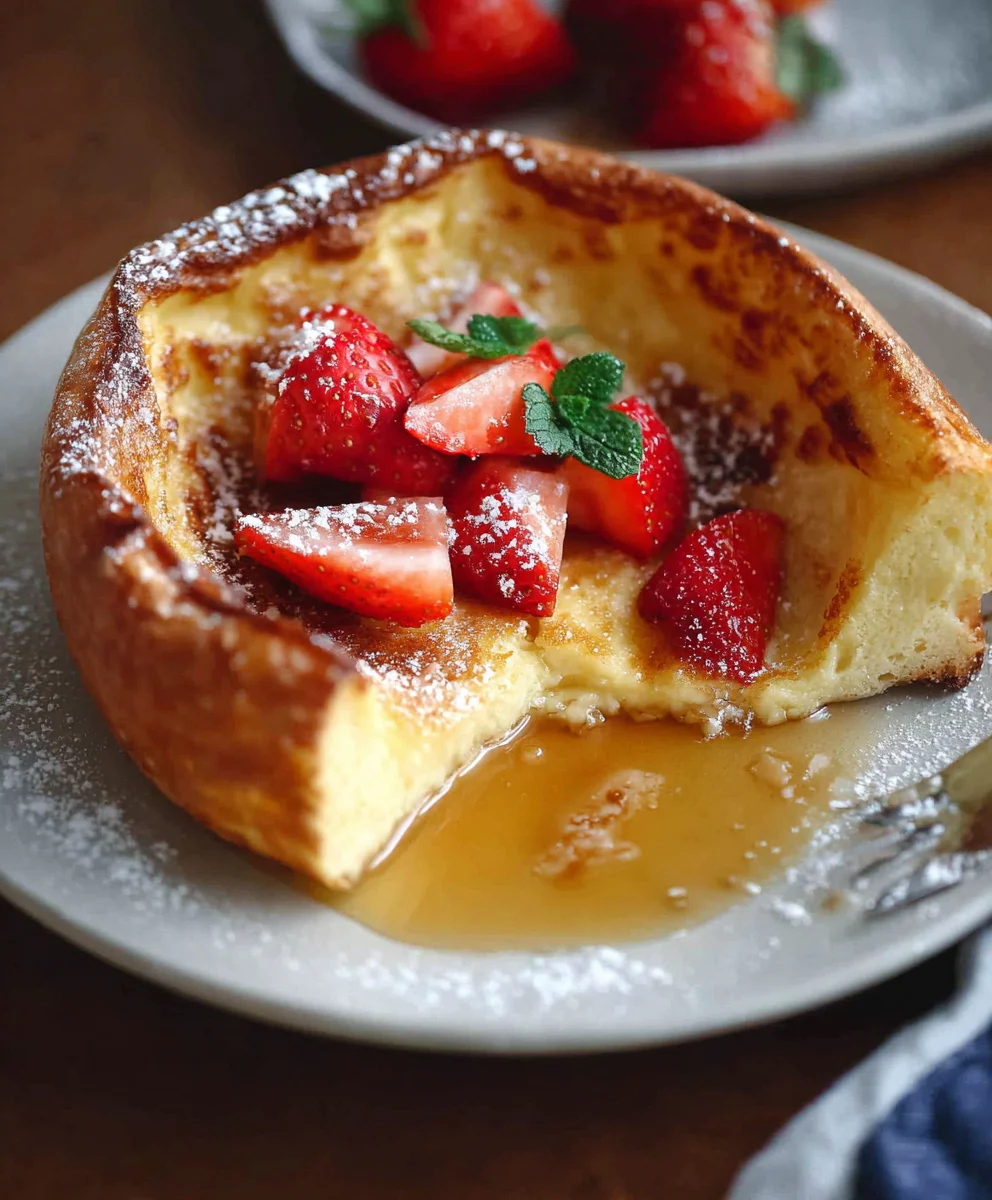
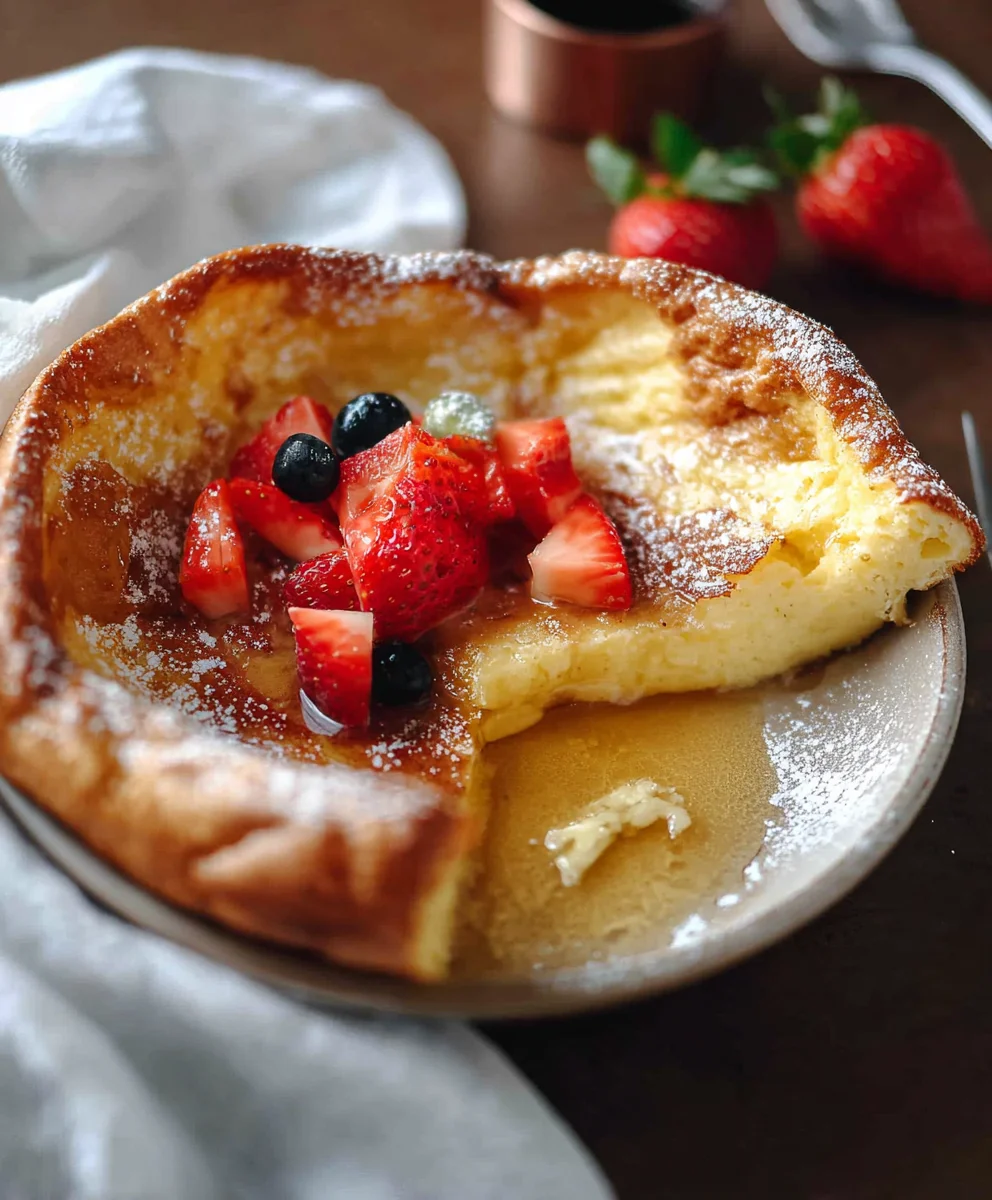
Once both German Pancakes are baked to perfection, remove them from the oven. The final Tablespoon of butter (about 10 g) can be melted and drizzled over the top of each pancake just before serving, or you can place small pats of butter on top as they cool slightly. Serve your magnificent German Pancakes immediately while they are still puffed and warm. They are absolutely divine with a dusting of powdered sugar, a squeeze of fresh lemon juice, or your favorite fruit toppings.
Conclusion:
I hope you’ve enjoyed learning how to make these delightful German Pancakes! This recipe offers a wonderfully simple yet incredibly satisfying breakfast or brunch option. The light, airy texture combined with that classic slight tang from the buttermilk makes these German Pancakes a true crowd-pleaser. Whether you’re serving them up for a special occasion or a quick weekday treat, they’re sure to bring smiles to everyone’s faces. Don’t be afraid to experiment with your favorite toppings; fresh berries, a dusting of powdered sugar, or a dollop of whipped cream are always fantastic choices. For those who like a little extra flair, consider adding a sprinkle of cinnamon or a squeeze of lemon juice for an added aromatic dimension. Give this recipe a try, and I’m confident you’ll find yourself returning to it time and time again. Happy cooking!
Frequently Asked Questions about German Pancakes:
Q1: What is the best way to serve German Pancakes?
German Pancakes are incredibly versatile! They are traditionally served with a sprinkle of powdered sugar and a squeeze of fresh lemon juice. However, you can also top them with fresh berries, a dollop of whipped cream, a drizzle of maple syrup, or even a spoonful of jam. They also pair wonderfully with a side of crispy bacon or breakfast sausage.
Q2: Can I make German Pancakes ahead of time?
While German Pancakes are best enjoyed fresh off the griddle for their optimal texture, you can prepare the batter a few hours in advance and store it in the refrigerator. However, the batter may need a quick whisk before cooking. Reheating cooked pancakes isn’t ideal, as they can lose their delicate fluffiness.
Q3: Are there any variations to this German Pancake recipe?
Absolutely! You can add a touch of vanilla extract to the batter for extra flavor, or even a tablespoon of sugar for a slightly sweeter pancake. For a more decadent version, fold in some fresh blueberries or chocolate chips just before pouring the batter onto the griddle.
Fluffy German Pancakes – Easy Recipe Delight
A simple and delightful recipe for fluffy German pancakes that puff up beautifully in the oven.
Ingredients
-
6 large eggs
-
1 cup milk (240 ml)
-
1 cup all-purpose flour (120 g)
-
dash salt
-
1 teaspoon vanilla extract (5 ml)
-
5 Tablespoons butter (70 g)
Instructions
-
Step 1
In a large mixing bowl, crack 6 large eggs. Add 1 cup of milk, 1 teaspoon of vanilla extract, and a dash of salt. Whisk together. -
Step 2
Gradually add 1 cup of all-purpose flour to the wet ingredients in two or three additions, whisking gently after each addition until incorporated and the batter is smooth and lump-free. The batter should have the consistency of heavy cream. Let the batter rest for 10-15 minutes. -
Step 3
Preheat your oven to 400°F (200°C). Place an oven-safe skillet on the stovetop over medium-high heat and add 2 Tablespoons of butter. Melt the butter until hot and sizzling. -
Step 4
Pour about half of the batter into the hot skillet and immediately transfer to the preheated oven. Bake for 10-15 minutes until puffed and golden brown around the edges. -
Step 5
While the first pancake bakes, heat another 2 Tablespoons of butter in a second oven-safe skillet. Once the first pancake is done, remove it from the oven and pour the remaining batter into the second hot skillet. Transfer to the oven and bake for 10-15 minutes. -
Step 6
Remove both pancakes from the oven. Drizzle the remaining 1 Tablespoon of melted butter over the top of each pancake. Serve immediately with your favorite toppings.
Important Information
Nutrition Facts (Per Serving)
It is important to consider this information as approximate and not to use it as definitive health advice.
Allergy Information
Please check ingredients for potential allergens and consult a health professional if in doubt.
Leave a Comment